ServicesWindshield Protection Film
Windshield Protection Film in Rocklin
A windshield takes more hits than any other part of the car. We install a clear film over the glass that soaks up rock strikes and road grit. When it wears out, we peel it and put on new film. Your factory glass stays intact.
What the Film Does and When It Makes Sense
Windshield protection film is a thin, optically clear layer that bonds to the outside of your windshield. A rock that would chip the glass hits the film instead. Sand and grit that slowly pit the glass wear the film. The film is built to be replaced, so you swap it out for a lot less than a new windshield.
It makes the most sense on newer cars with cameras and sensors behind the glass, where a replacement windshield often means recalibration on top of the glass itself. It also pays off if you drive a lot of highway miles behind trucks. Heading up to the mountains in winter, when the roads get sanded, a film-covered windshield is the one taking the beating.
Before we touch your car, you get a written quote that lists the film, the prep and anything special about your glass. What is on that paper is what you pay.
What Comes With the Install
Glass inspection first
We look over the whole windshield before anything else. If there is a chip or a crack, we show you. Film does not fix damage, and we will not seal a problem under it without telling you.
Deep cleaning of the glass
We wash the glass, then clay it to pull out stuck-on grit and old wax. Anything left on the surface shows up under the film, so this step gets real time.
Film cut to your windshield
The film is trimmed to fit your glass, edge to edge, with clean lines along the trim. We work around the camera and sensor area so your driver-assist features keep reading the road.
Shaped to the curve
Windshields curve in two directions. We heat-form the film so it lays flat across the whole surface without fingers or lifted edges.
A walk-through at pickup
We show you the finished glass, point out the edges, and tell you what to avoid while the film cures. You leave knowing how to wash it and how to care for your wipers on it.
Signs Your Windshield Needs Film
You have already replaced one
If you have paid for a windshield in the last few years, you know what it costs. Film on the new glass is cheaper than doing it again.
Small pits catch the sun
Tiny pits and sandblasting show up as glare at sunrise and sunset. Once they are in the glass, they stay. Film stops more of them from forming.
Your car has a camera behind the glass
Lane-keep, automatic braking and similar systems often look through the windshield. Replacing that glass can mean extra time and cost to recalibrate them.
You drive behind trucks a lot
Gravel trucks and long highway commutes throw stones. If you hear that sharp tick often, your windshield is collecting damage.
You just bought a new car
The best time is before the first chip. Fresh glass under film stays clean for as long as you keep the film up.
How the Day Goes
- 1
Quote on paper
After we talk through your car and the film choice, we put the scope and the price in writing. No add-ons show up later.
- 2
Drop-off and inspection
You bring the car to our shop. We check the glass with you there and note any chips before we start.
- 3
Prep and install
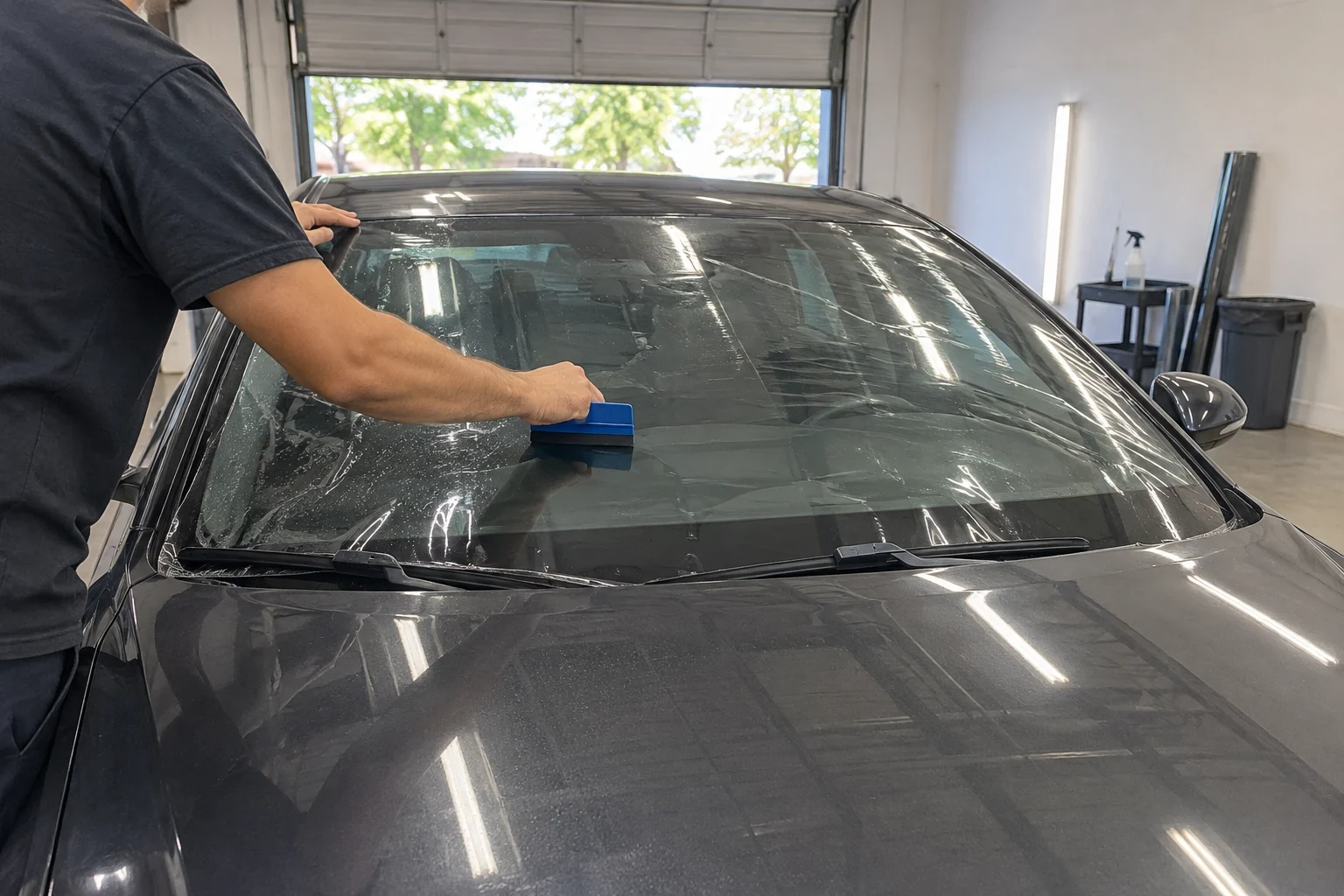
We clean and clay the windshield, cut the film, and lay it with a slip solution. Then we heat-form it and squeegee out the water from the center to the edges.
- 4
Cure and pickup
We give the edges time to set before you take the car. Some haze or small water spots can show for a few days while the film dries out. That is normal and it clears on its own.
What Moves the Price
Every windshield is a little different, so we price your car, not an average one. These are the things that change the number. You will see each one called out on your written quote.
- Size and curve of the glass
- A big, steep windshield on a truck or SUV takes more film and more forming time than a small, flat one.
- Film choice
- Films differ in thickness, clarity and how well they shrug off wiper wear. We explain the tradeoffs and let you pick.
- Cameras and sensors
- Glass with a camera pod, rain sensor or heads-up display area needs careful cutting and fitting around those parts.
- Condition of the glass
- Heavy contamination or old film that has to come off first adds prep time. We tell you up front if your glass needs it.
Windshield Film Questions
Something not covered here? (916) 536-6212
Will I be able to see through it clearly, even at night?
Yes. The film is optically clear and made for windshields. Once it cures, most people stop noticing it. Right after install you may see a little haze while the moisture dries out.
Will it stop my windshield from cracking?
It cuts down on chips and pitting from small rocks and grit, which is where most windshield damage starts. It does not make glass unbreakable. A big rock or a hard impact can still crack the windshield under the film.
How do my wipers work on it?
Wipers run on the film just like on glass. Worn or gritty blades will scratch the film over time, so we suggest fresh blades and a clean windshield before you run them dry. Scratches stay in the film, not the glass.
What happens when the film wears out?
We peel the old film and put on a new piece. The glass under it should look the way it did on install day. That is the whole point of a replaceable layer.
Can I put film on a windshield that already has a chip?
We can, but we will show you the chip first and talk about getting it repaired before we cover it. Film over a fresh chip can keep dirt out, but it does not stop a crack from spreading.
Can I add other protection while the car is in?
Yes. Plenty of people pair this with paint protection film on the hood and bumper, or with window tint on the side glass. We can quote the work together so you know the full scope before drop-off.
Ready to Stop Paying for Windshields?
Tell us your car and how you drive. We will walk through the film options and put the price in writing before any work starts.