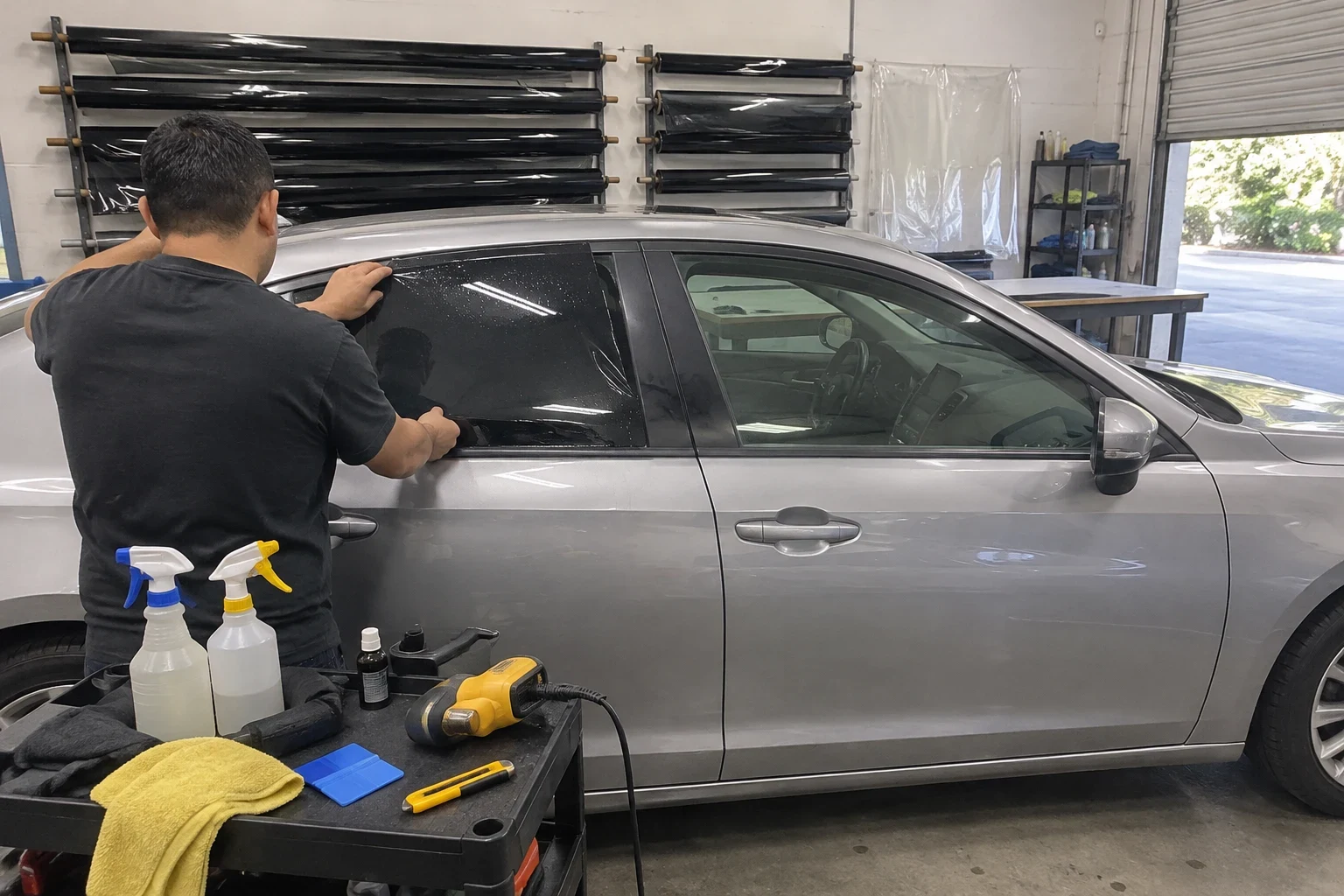
Should I Get 35 or 50 Tint on My Car in Rocklin?
The number on the box tells you how dark the glass looks, not how cool your car stays.
Should I get 35 or 50 tint?
Pick 35 if you want a darker look and more privacy on the rear glass. Pick 50 if you drive a lot at night or want a lighter, factory look. Either way, the film type does more for heat than the shade does. In California, the front side windows have their own rules. Talk it through with us at (916) 536-6212.
What 35 and 50 actually mean
The number is visible light transmission, or VLT. A 35 film lets about 35 percent of visible light through. A 50 film lets about half through. Lower number, darker glass.
From the outside, 35 reads as clearly tinted. You can still see shapes inside in daylight, but faces get hard to make out. A 50 film looks like a light smoke. Most people walking by would guess it came that way from the factory.
Keep in mind the glass itself already blocks some light. So the final number on the car is always a little darker than the number on the film.
What California allows on each window
This part decides a lot before taste even comes in. California requires the front side windows to let in at least 70 percent of light, counting the glass and the film together. That rules out both 35 and 50 on the driver and passenger doors. On the front doors, the honest options are a clear or near-clear heat film, not a shade.
The rear side windows and the back glass are a different story. You can go as dark as you like there, as long as the car has side mirrors on both sides. Nearly every car on the road does. On the windshield, only a non-reflective strip across the top is allowed.
So for most drivers, the real question is 35 or 50 on the back half of the car. We will tell you plainly what fits the law on each window before we cut any film.
- Front side windows: at least 70 percent light through, film and glass combined
- Rear side windows: any darkness with dual side mirrors
- Back glass: any darkness with dual side mirrors
- Windshield: non-reflective strip along the top only
Which one keeps the car cooler
Darker film does block a bit more glare. But heat rejection comes mostly from what the film is made of. A good ceramic film at 50 can keep a cabin cooler than a cheap dyed film at 35. Dyed film mostly just darkens. Ceramic film is built to block infrared, which is the heat you feel on your arm.
That matters when a car sits in an open lot through a Rocklin summer afternoon. The seat, the wheel and the dash all soak up heat. A film that stops infrared cuts that down no matter which shade you pick. UV protection is close to the same across quality films at either shade, so your dash and leather get protected both ways.
If heat is your main reason for tinting, choose the film first. Then pick the shade you like looking at.
How each one drives at night
Night is where the two really split. Backing out of a dark driveway or a parking garage, 35 on the rear glass makes it harder to judge distance behind you. A backup camera helps, but you still glance over your shoulder. With 50, the rear view stays close to what you are used to.
If you drive rural roads with no streetlights, or your eyes are not what they used to be, 50 is the easier choice. If most of your driving is daytime and around town, 35 is usually fine once you get used to it.
One more thing. Many SUVs, trucks and minivans already have dark factory privacy glass in the back. Adding 35 over that can make it very dark. Adding 50 over it mostly adds heat and UV rejection without changing the look much. We check the factory glass before we recommend a shade.
- Choose 35 for: more privacy, a darker look, kids or gear in the back seat out of sight
- Choose 50 for: frequent night driving, easier reversing, a subtle factory look
- Either one: same UV protection with a quality film
How we help you decide
When you bring the car to the shop, we hold film samples up to your actual glass. Shades look different on a white sedan than on a black truck, and different again with factory privacy glass behind them. Seeing it on your car beats guessing from a photo.
Before we start, you get the plan in writing. It lists which windows get which film and shade, the film type, and what goes into the price, like the number of windows, curved back glass, and removing any old film. No add-ons show up later. Some people also pair tint with windshield protection film to keep the front glass from chipping, and we put that on the same written quote if you want it.
More questions about tint shades
Something not covered here? (916) 536-6212
Can I mix 35 and 50 on the same car?
Yes. Some drivers run 35 on the rear side windows for privacy and 50 on the back glass for better rear visibility. It looks a little uneven up close, but most people never notice.
Does darker tint fade faster?
Fading comes from the film type, not the shade. Dyed films can turn purple over time. Ceramic and carbon films hold their color much longer at any darkness.
How long before I can roll the windows down?
Give it a few days so the film can finish curing to the glass. In warm weather it cures faster, and some small haze or water spots clear up on their own during that time.
Will tint affect my phone or GPS signal?
Ceramic and dyed films do not interfere with signals. Some metallic films can, which is one reason we steer most cars toward ceramic.
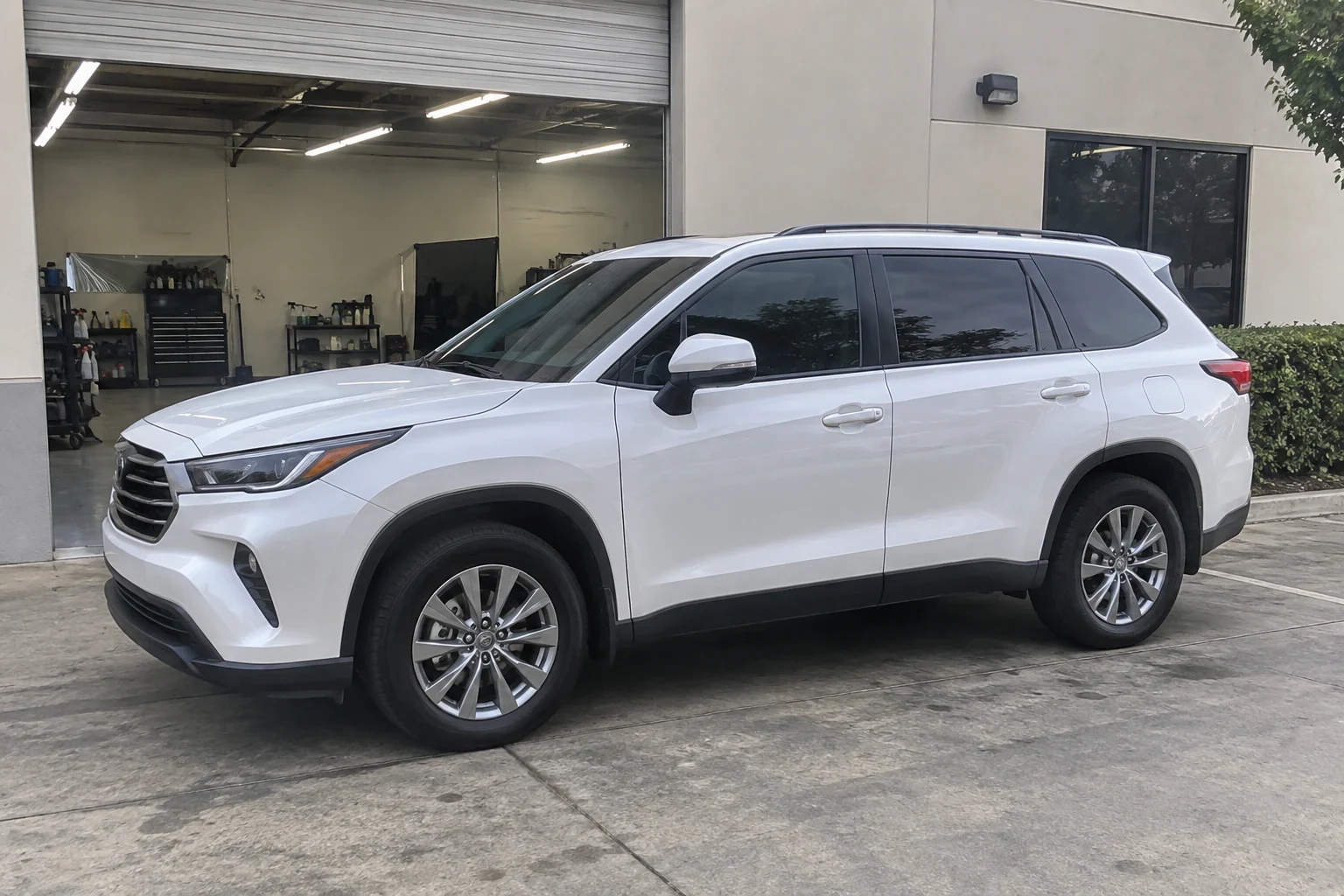
See both shades on your own glass
Bring the car by and we will show you 35 and 50 side by side, explain what California allows on each window, and put the film, shade and price in writing before any work starts. A phone call sets up your consultation and gets you a quote.